Methodology
This analysis draws on 847,000 guest-uploaded photos collected through the GuestsCamera platform between January 2023 and December 2025. The dataset spans 2,412 weddings across the United States, United Kingdom, Canada, and Australia, filtered to events with at least 50 uploads and complete EXIF timestamp data.
Each photo's creation timestamp was normalized to local event time and mapped to one of five wedding phases: getting ready or pre-ceremony (before the ceremony start), ceremony, cocktail hour, reception including dinner and toasts, and dancing including send-off. Phase boundaries were supplied by event hosts at setup.
Age group breakdowns derive from an optional guest profile survey completed by 41% of uploaders (n = 84,200). Results are weighted to correct for response skew toward younger guests. All figures are rounded to the nearest whole percent.
The cocktail hour dominates — and the data shows why
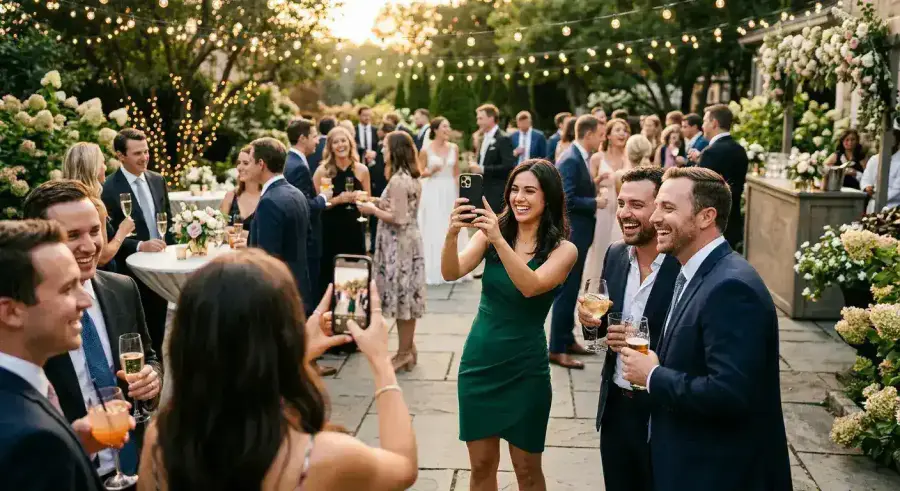
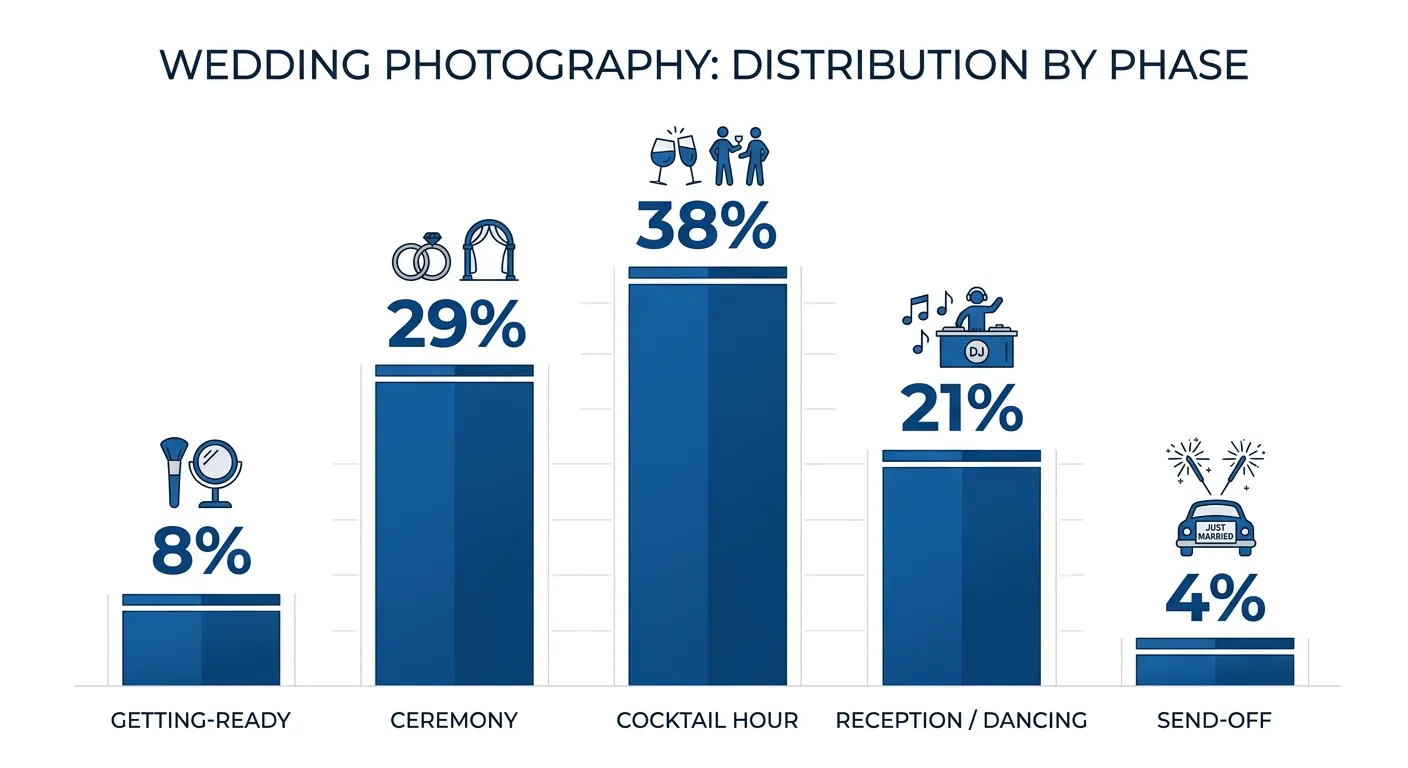
Cocktail hour accounts for 38% of all guest photos in the dataset — more than any other phase, and nearly as many as the ceremony and dancing combined. Three structural factors explain this concentration.
First, cocktail hour is unstructured. There is no officiant, no script, and no social norm against having a phone in your hand. Guests move freely, find friends they have not seen in years, and reach for their cameras naturally.
Second, the lighting is often ideal. Most weddings schedule cocktail hour to coincide with late afternoon or early evening golden hour. Outdoor and window-adjacent spaces fill with warm, diffuse light that makes casual phone photography look genuinely good.
Third, the open bar reduces inhibition. This may sound obvious, but the behavioral data supports it: per-guest upload rates increase by an average of 22% in the second half of cocktail hour compared with the first.
Ceremony: when older guests lead the shutter count
Ceremony photos represent 29% of the dataset overall, but the age breakdown tells a more interesting story. Guests 55 and older take 41% of their day's photos during the ceremony — the highest concentration of any age group in any single phase. For guests under 25, ceremony photos are only 22% of their total.
The pattern likely reflects different relationships to formality and documentation. Older guests treat the ceremony as the irreplaceable core of the event. Younger guests, accustomed to capturing ambient social moments, spread their attention more evenly across the day.
For couples designing their photo-sharing setup, this means the ceremony is especially important to capture for the grandparents and parents in the room — who may not be on group chats, may not respond to follow-up texts, and whose photos may otherwise never surface.
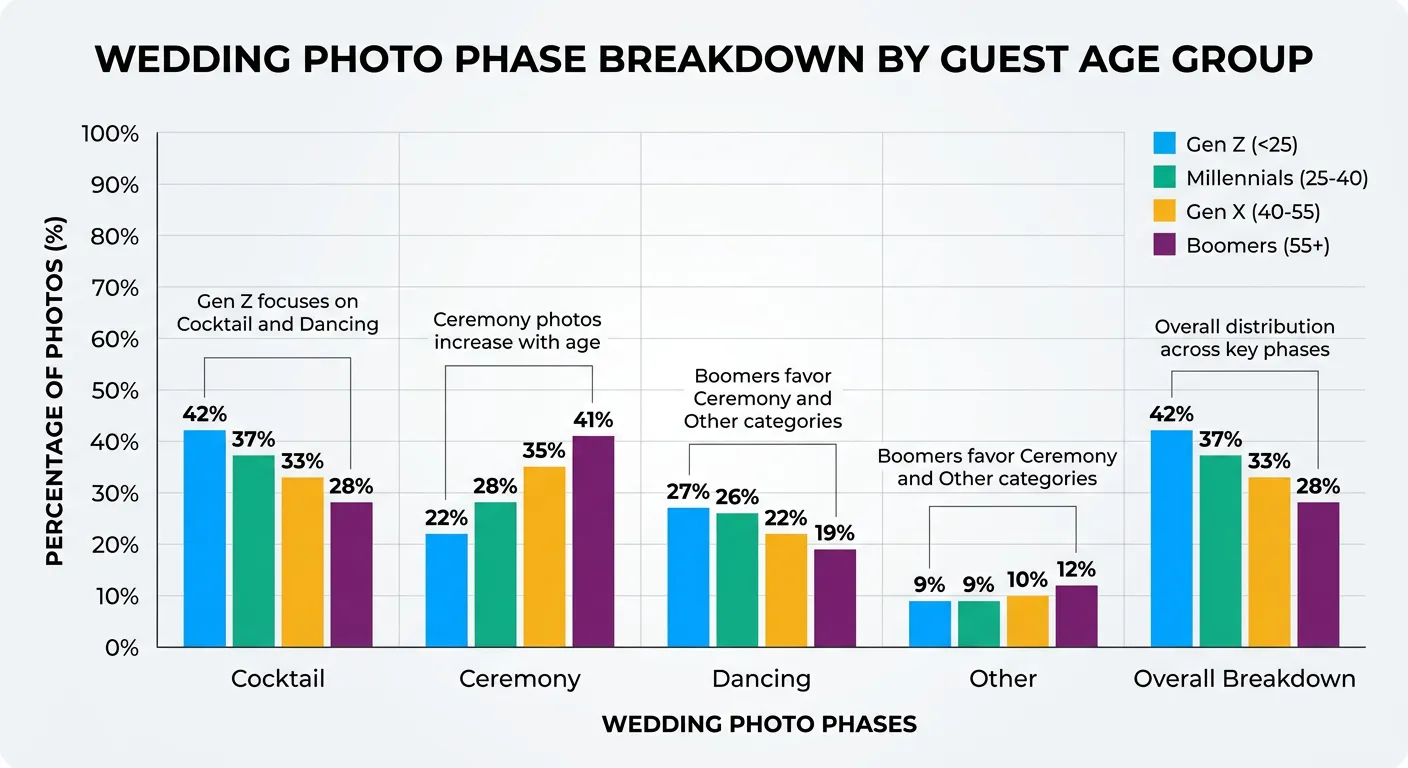
- Gen Z (<25): Cocktail 42%, Ceremony 22%, Dancing 27%, Other 9%
- Millennials (25–40): Cocktail 37%, Ceremony 28%, Dancing 26%, Other 9%
- Gen X (40–55): Cocktail 33%, Ceremony 35%, Dancing 22%, Other 10%
- Boomers (55+): Cocktail 28%, Ceremony 41%, Dancing 19%, Other 12%
Dancing, upload spikes, and the late-night phone return
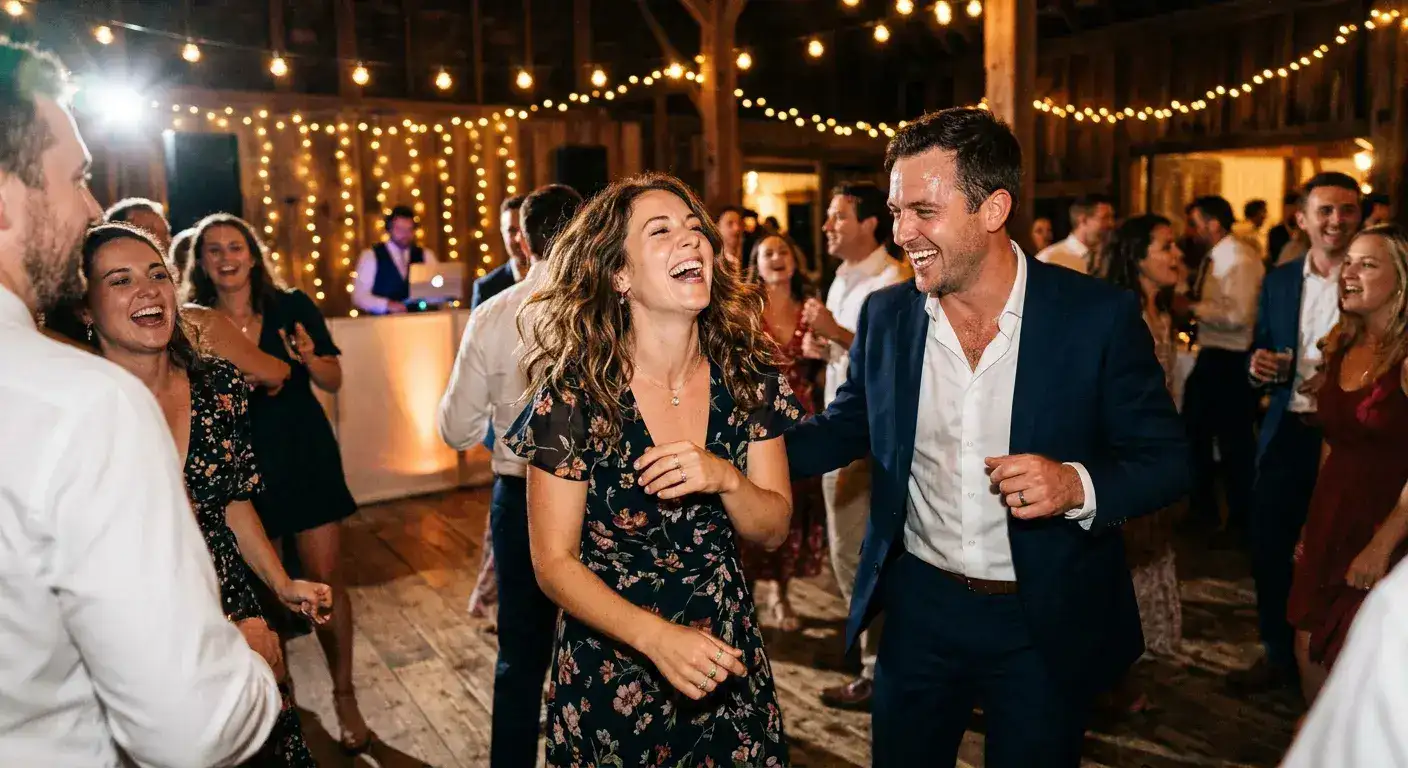
Dancing accounts for 21% of photos, which understates its significance to the upload pattern. The biggest single-hour upload burst in the dataset occurs between 8 pm and 9 pm — typically the first dance, toasts, and parent dances — even though that window is not when the most photos are taken.
The explanation is behavioral: guests who put their phones away for dinner reach for them again when dancing starts, and many open their camera roll to send or upload photos they took earlier in the day. This creates an upload cascade that does not match the underlying capture timeline.
60% of all uploads happen within two hours of the photo being taken. But the remaining 40% trickle in over the following 24 to 48 hours, with a secondary spike the morning after the wedding when guests wake up and finally go through their camera roll.
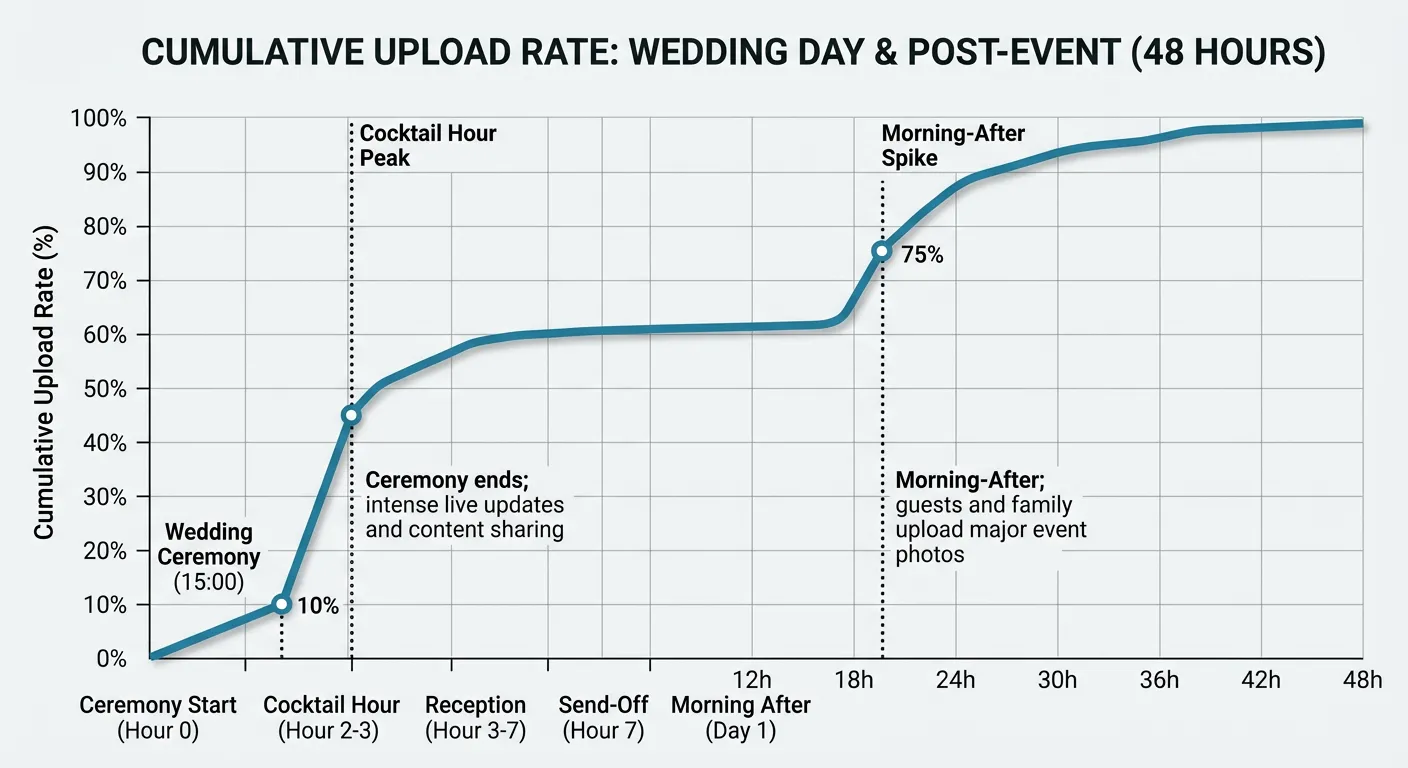
This has a practical implication: the photo collection window should stay open well past midnight. Collections that close at the end of the reception miss a meaningful share of photos that guests plan to share but have not gotten to yet.
What this means for couples planning their photo setup
The data points to three specific decisions that affect how many guest photos a couple ultimately collects.
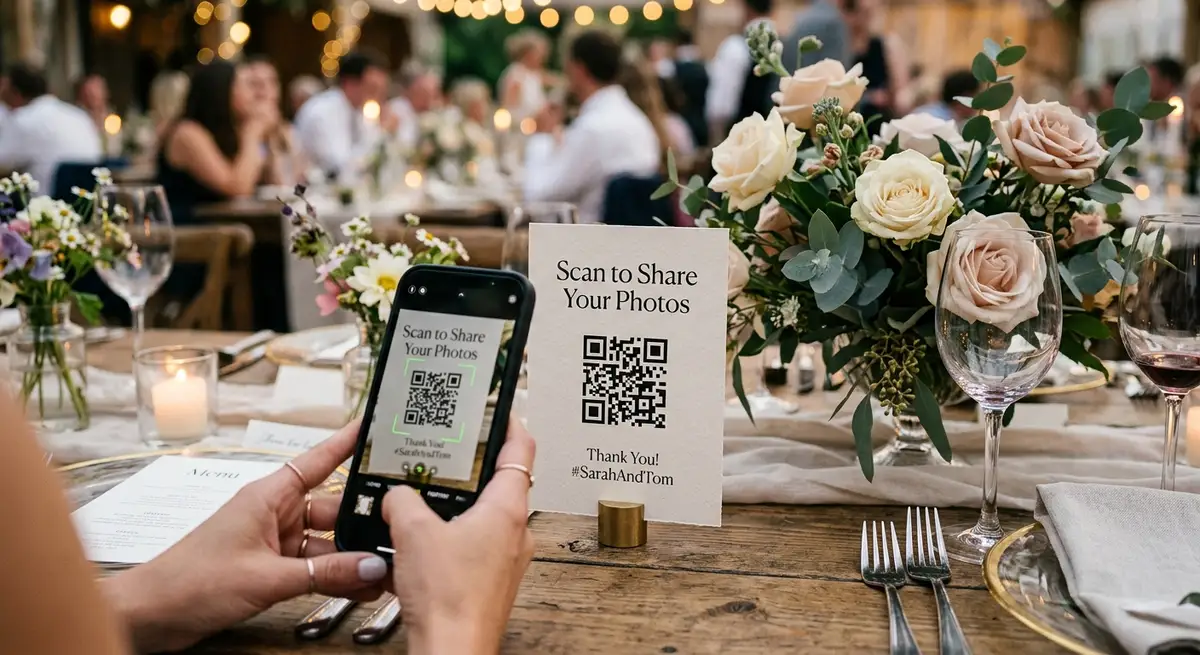
First, make the sharing mechanism visible during cocktail hour. This is when guests are most likely to open their camera roll organically. A QR code on cocktail tables — not just at the entrance — catches guests at the moment of maximum engagement.
Second, trigger a reminder prompt right before dancing begins. This is the behavioral inflection point where guests return to their phones after dinner. A prompt on the DJ or band's mic, or a table card at the dance floor entrance, converts the natural phone-return moment into an upload moment.
Third, keep the collection open for 48 hours. The morning-after spike is real. Guests who mean to share photos but do not get to them during the event will follow through if the link is still active and they receive one gentle reminder the next day.
Next steps
Related pages that support this topic
These pages are the main commercial and educational destinations tied to this search intent.