The question couples actually mean to ask
Most searches for 'wedding photographer alternative' or 'do I need a wedding photographer' are not really asking whether to skip professional photography entirely. They are asking whether a professional photographer is worth the cost, and whether guest photos can fill the gap.
That is a fair question. Wedding photography is one of the largest single-vendor expenses in most budgets, often running from $2,500 to $6,000 or more. It makes sense to ask hard questions about it. But the answer requires understanding what a professional photographer actually does versus what your guests capture — because those two things are far less interchangeable than people assume.
What a professional wedding photographer does that guests cannot
A professional photographer is not just someone with a better camera. They bring technical expertise, intentional composition, and a shooting workflow designed to cover a structured timeline. There are specific things on that list that are almost impossible to replicate from a room full of guests with smartphones.
Ceremony coverage is the clearest example. Guests at a ceremony are seated, often behind other people, in fixed positions they cannot leave without disrupting proceedings. A photographer moves, positions themselves strategically, and captures the exchange of vows, rings, and the first kiss from angles your guests simply cannot reach.
Portrait work is another category where professionals are irreplaceable. The couple portraits, family groupings, and wedding party shots that happen during the "golden hour" window require direction, lighting knowledge, and the ability to pose and organize large groups quickly. Guests do not do this.
Editing is the invisible third category. Professional wedding photos go through post-processing — color correction, exposure adjustment, skin tone balancing, and curation from thousands of frames down to a polished gallery. The raw JPEGs from a guest's phone camera roll are not the same deliverable.
- Strategic ceremony positioning guests cannot replicate
- Directed portraits and family groupings
- Consistent lighting management across the day
- Professional-grade post-processing and culling
- Full timeline coverage from getting ready to send-off
- Backup equipment and contingency planning
What guest photos capture that professionals miss
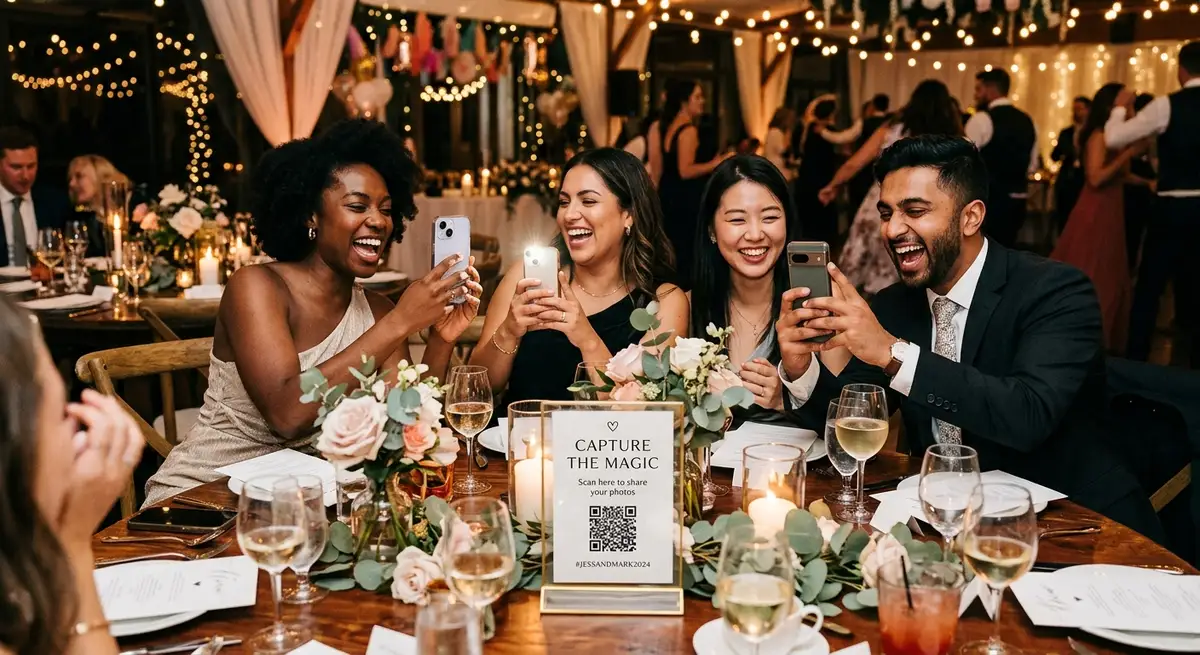
This is where most couples underestimate what they are leaving on the table. Guests capture a genuinely different layer of the wedding — and it is a layer that professional photographers structurally cannot get.
A photographer is working. They are moving through the room with a job to do, which means they are capturing the defined moments on the shot list, not lingering at a table where cousins are catching up for the first time in three years. Guests are present. They are living inside the experience, not documenting it from the outside.
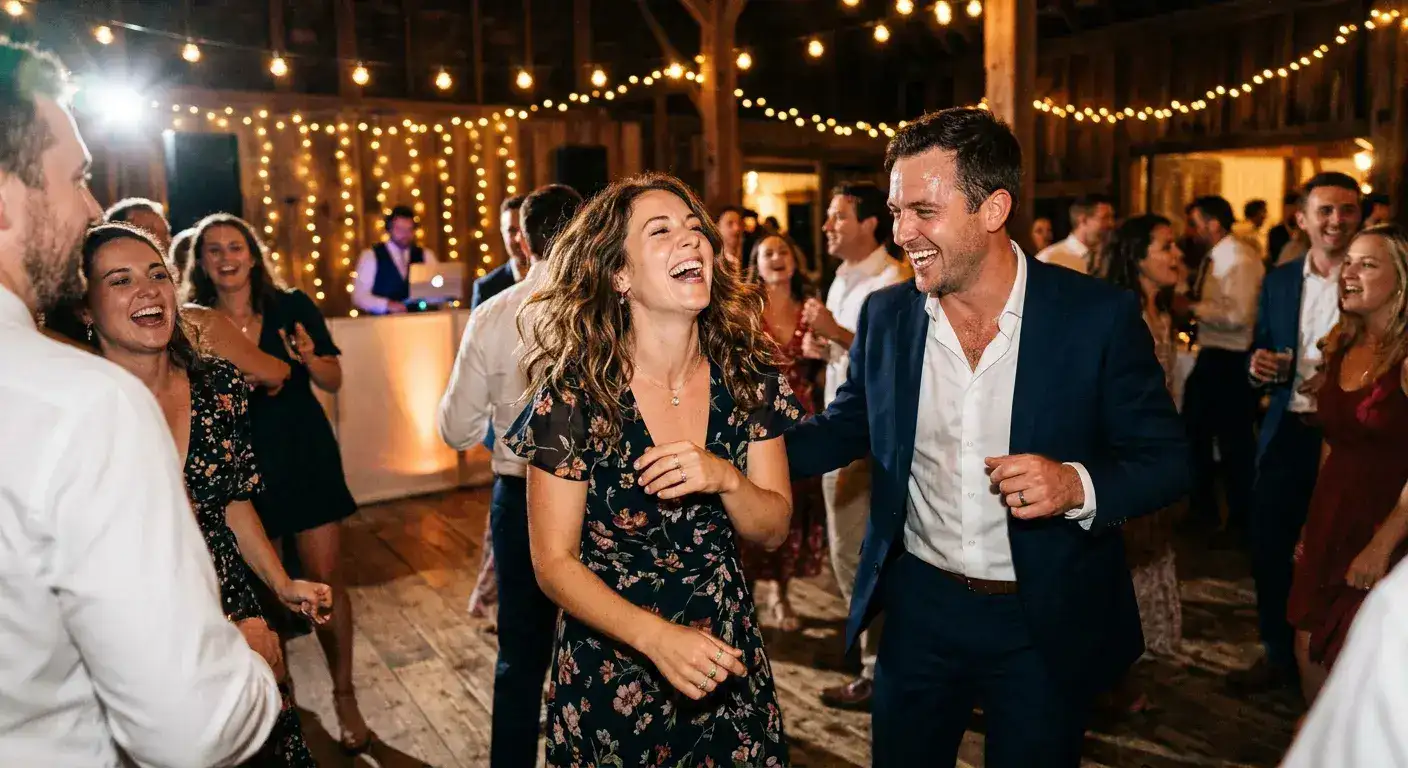
The back-table conversation. The grandparent quietly watching from across the room. The group of friends who disappeared to do a bad dance challenge at the cocktail hour bar. The groom laughing so hard at the best man's toast that he cries. The flower girl falling asleep under a chair at 10pm.
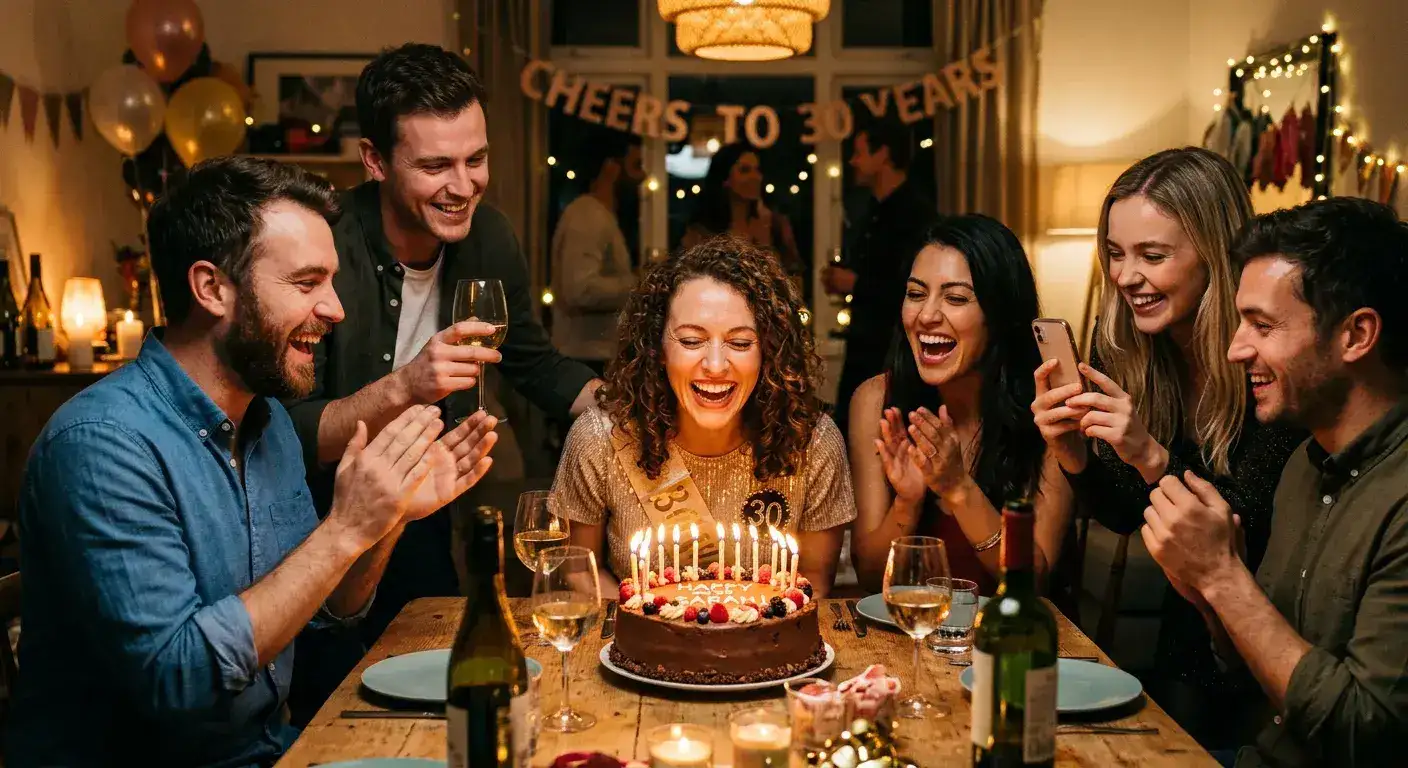
These are not on any shot list. They happen when a guest has a phone in their hand and sees something worth capturing. The only way to collect them is to make it easy to share them.
- Candid table moments the photographer is not stationed at
- Spontaneous reactions during toasts and first dances
- Behind-the-scenes moments before and between formal shots
- Multiple simultaneous viewpoints across the venue
- Late-night candids after the photographer leaves
- The guest's personal relationship to the moment — their perspective, not a professional's
What happens at weddings without a photographer
A small number of couples do choose to forgo professional photography entirely — usually for budget reasons, elopements, or very intimate backyard ceremonies. In those cases, guest photos can carry more of the load than they would at a large formal wedding. But this works best when the wedding is small, the guest list skews tech-comfortable, and the couple genuinely understands what they are giving up.
At a larger traditional wedding, relying entirely on guest photos tends to produce an uneven result. You will end up with a lot of cocktail hour and dance floor content, and thin coverage of the ceremony, portraits, and formal moments — exactly the inverse of what most couples want.
If budget is the driver, a more common solution is to hire a photographer for a partial day — covering getting ready, ceremony, and portraits only — and let guests carry the reception coverage from there.
The most effective model: professional photographer plus an organized guest photo system
The couple with the best wedding album at the end of the day is almost always the one who had both: a professional covering the structured timeline and a functional guest photo system filling in the rest.
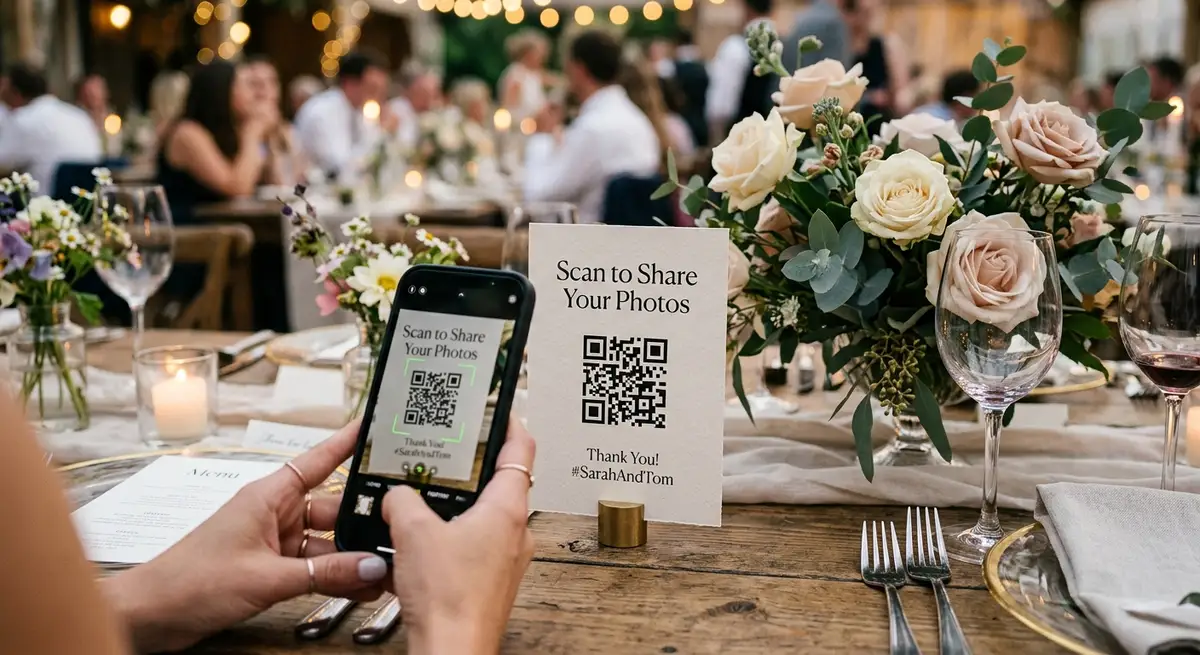
The problem with the 'guest photo' half of that equation is that it typically does not work unless you actively set it up. Guests take hundreds of photos. They almost never share them without a prompt — and even when they mean to, friction kills follow-through. A text reminder a week later converts poorly. A direct QR code at the venue converts much better.
Setting up a browser-based guest photo upload flow does not replace the photographer. It captures the layer of the wedding that no professional will ever document — the ambient, spontaneous, deeply personal moments that happen everywhere at once, all day long.
If budget forces a choice: where to put the money
If you genuinely cannot afford both a full-day photographer and a guest photo system, prioritize the professional photographer for the ceremony and portraits. Those are the hardest to recreate and the most time-sensitive. A guest phone camera at 2pm in direct sun during a ceremony still produces inconsistent results.
The reception is where guest photos perform best — unstructured social time, better light, people relaxed and engaged. That is exactly when a frictionless photo-sharing setup works hardest.
A photographer for 6 hours covering getting ready through portraits, plus a QR code photo system for the reception, is a better allocation than a 10-hour full-day photographer with no guest photo plan.
Questions to ask yourself before deciding
Most couples answer this question better when they are specific about what outcomes they want, rather than debating the category of 'professional vs. guest.'
- Do you want edited, polished portraits? → You need a professional.
- Do you want full ceremony coverage from multiple angles? → You need a professional.
- Do you want candid table moments and late-night dancing shots? → You need a guest photo system.
- Do you want both? → Plan for both. A QR code guest system costs very little compared to a photographer.
- Is budget the constraint? → Consider a partial-day photographer plus a guest photo setup.
- Are you doing an intimate elopement? → Guest photos or a friend with a good camera may suffice.
What a good guest photo system actually looks like
The version of guest photo sharing that works is browser-based, requires no app install, and gives every guest one QR code to scan. They choose photos from their camera roll and upload directly to the couple's Google Drive folder — full resolution, organized immediately, no group chat chaos.
The version that does not work is 'we'll text everyone afterward and ask them to send photos.' That approach suffers from the same problem as most well-intentioned post-event tasks: friction kills follow-through. By the time guests are home and the moment has passed, the camera roll becomes a project they never get to.
The difference between the two is not the quality of the guests' photos. It is whether the collection system is in place at the moment they want to share.
Next steps
Related pages that support this topic
These pages are the main commercial and educational destinations tied to this search intent.